The Black Experience in Century

PLANTATION MENTALITY

Next page

This page last modified on Wednesday, April 14, 2004

Some outsiders viewed the creation of the mill towns in the South as the product of adventurers and carpetbaggers from the nineteenth century. Two of the mill's founders, Martin H. Sullivan and his brother Dan F. Sullivan, purchased timberland in Alabama under the name Sullivan Company. It is believed that the Sullivan brothers were Yankee soldiers from New York, who after the war, went back to New York, sold their holdings and came back to the south and purchased the timberland. By 1891, the company had twenty miles of log ditches and a large railroad system in Alabama.

****

In creating the mill, a dictatorship over the community developed. This dictatorship may have emerged because the mill towns provided certain functions and features that other businesses did not provide. The typical mill town "possessed a plantation type mentality." In the 1880's when mill towns began to bloom, "the plantation system existed in the social structure and in the minds of the employer and employees." The planter/master was replaced
by the managerial system
(Edward Hauss) with a
more than business-like
attitude towards the
community. These
strong paternalistic
attitudes guided the
managers towards
maintaining strict
control over the
operation of the mill
and the community
without advice from
workers or outsiders.
Citizens in the
community remember
that Mr. Hauss would
not allow any outsider
in the town without his knowledge.

According to the Escambia County Historical Quarterly, this system of parental control was an attitude that blacks were accustomed to. Being so soon out of slavery blacks lacked an independent spirit and realized their limited ability to change the system, therefore, "Negro workers accepted the conditions and pay." This parental attitude carried over into the twentieth century.

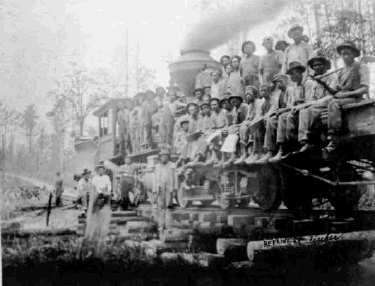
Logging crew